Key Takeaways from this Article:
1. Most traders fail not because their strategy is flawed, but because they cannot control losses.
2. Risk management is the only discipline that remains effective across every market condition.
3. The three pillars of risk management are position sizing, stop-loss placement, and risk-to-reward ratios.
4. A trader who manages risk well can be profitable with a win rate as low as 40%.
5. Capital preservation always comes before profit generation.
Introduction:
Most traders enter the markets with the same belief: if they can find the right strategy, the right indicator, or the right signal, profits will follow. They spend months, sometimes years, chasing high-accuracy setups, testing new systems, and searching for an edge that will finally make trading click.
What they almost never hear early enough is this: the strategy is not the problem. Risk is.
The majority of traders who blow accounts are not failing because their entries are poor. They are failing because they have no structure around how much they lose when they are wrong. A single uncontrolled loss can wipe out weeks of disciplined gains. A few consecutive losses with no risk framework in place can end a trading career entirely.
Risk management is the discipline that separates traders who survive from those who do not. It is not an advanced concept reserved for professionals. It is the most fundamental skill in trading and the one that is most consistently overlooked by beginners.
At AfroTrader Academy, risk management is not treated as an optional topic or a chapter you read at the end of a course. It is the starting point for every trader who joins our community, regardless of whether they trade Forex, Synthetic Indices, Cryptocurrency Futures or other leverged assets.
Amateur traders think about how much they can make. Professional traders think about how much they can lose.
A principle shared across every professional trading desk in the world.
What Is Risk Management?
Risk management is the structured process of defining and controlling how much capital is placed at risk on each trade, and how losses are capped when the market moves against your position. It operates on a simple but powerful principle:
“Before you enter any trade, you must already know the maximum amount you are willing to lose if that trade fails.“
This is not about being pessimistic. It is about being professional. Every business that manages money, from hedge funds to insurance companies, operates with defined risk parameters. Trading is no different. Without risk management, trading is not investing. It is gambling.
Effective risk management answers three questions before every single trade:
- How much of my capital am I risking on this trade?
- At what price does the trade idea become invalid?
- What is the potential reward relative to what I am risking?
When a trader can answer all three questions with clarity and confidence before pressing the buy or sell button, they are managing risk. When they cannot, they are speculating blindly.
The Three Pillars of Risk Management
Risk management rests on three core components that work together as a system. Remove any one of them and the entire structure becomes unstable.
Pillar 1: Position Sizing
Position sizing is the practice of calculating how large your trade should be relative to your account balance, based on how much you are willing to risk. It is arguably the most important mechanical skill in trading and one that the vast majority of beginners never learn properly.
Professional traders do not choose lot sizes based on gut feel, past wins, or how confident they feel about a setup. They calculate position size mathematically, using a predefined risk percentage as the input.
The standard framework used by disciplined traders across all markets is as follows:
Position Sizing Formula
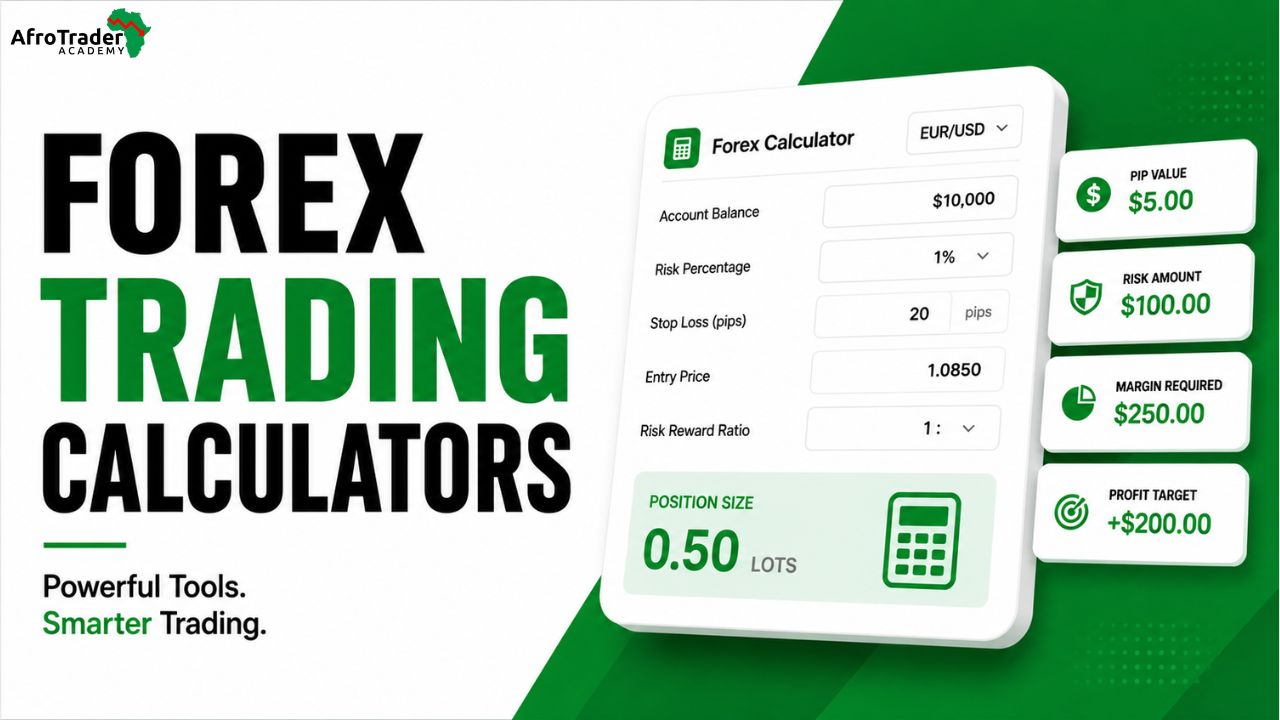
Risk Amount = Account Balance x Risk Percentage
Position Size = Risk Amount / (Stop Loss in Pips x Pip Value)
Example: $10,000 account | 1% risk | 50 pip stop loss | $1 pip value
Risk Amount = $100 | Position Size = 2 standard lots
Most disciplined traders risk between 0.5% and 2% of their account per trade. This range ensures that even a streak of 10 consecutive losing trades reduces the account by no more than 20%, a fully recoverable drawdown for a trader with discipline.
Traders who risk 5%, 10%, or more per trade may see spectacular gains during winning streaks, but a single losing streak can eliminate their entire account. The mathematics of large drawdowns work against recovery: a 50% loss requires a 100% gain just to break even.
Proper position sizing delivers three critical benefits:
- It removes emotion from trade execution by defining acceptable loss upfront
- It keeps drawdowns small and psychologically manageable during losing periods
- It allows a trader to remain in the market long enough for their edge to play out over time
Without position sizing, even a strategy with a genuine statistical edge will eventually produce account-destroying results.
Checkout our free forex trading calculators here:
Pillar 2: Stop-Loss Placement
A stop loss is a predefined price level at which a losing trade is automatically closed. It represents the point at which your trade idea is no longer valid. You had a reason to enter the trade based on your analysis. When price reaches your stop loss, that reason no longer exists.
Stop losses are not optional. They are not a sign of weakness or a lack of confidence in your analysis. They are the mechanism that enforces your risk management decisions automatically, removing the possibility of emotional interference once a trade is live.
The most common and most damaging mistake traders make with stop losses is moving them. When a trade moves against them, rather than accepting the small planned loss, they widen the stop loss in the hope that the market will reverse. This turns a controlled, planned loss into an unplanned, emotionally driven one. And unplanned losses are almost always larger.
Professional stop-loss placement is based on one principle: the stop goes where the trade idea becomes invalid, not where the loss becomes acceptable. The distinction is critical.
There are three widely used approaches to stop-loss placement:
- Structure-Based Stops: Placed beyond significant support or resistance levels, swing highs or lows, or key market structure zones. This is the most widely used and logically sound method.
- Volatility-Based Stops: Placed using tools such as the Average True Range (ATR) to account for normal market fluctuation and avoid being stopped out by noise.
- Invalidation-Based Stops: Placed at the exact level where your trade setup is no longer valid based on price action rules or your specific trading framework.
What all three approaches have in common is that the stop is determined by the market, not by the size of loss you are willing to tolerate. If the market-based stop implies a loss that exceeds your risk threshold, the correct response is to reduce your position size, not to move the stop closer.
Pillar 3: Risk-to-Reward Ratio
The risk-to-reward ratio compares the potential profit of a trade to the potential loss. It is the single most important factor in determining whether a trading strategy is mathematically viable over time, regardless of its win rate.
A 1:2 risk-to-reward ratio means that for every $1 risked, the target profit is $2. A 1:3 ratio means $3 of potential profit for every $1 risked.
Here is why this matters so profoundly:
40% Win rate | 1:3 Risk-to-reward | Profitable Long-term outcome
A trader who wins only 4 out of every 10 trades but maintains a consistent 1:3 risk-to-reward ratio will be profitable. For every 10 trades with $100 risk per trade: 4 wins at $300 each = $1,200. 6 losses at $100 each = $600. Net result: $600 profit.
This is one of the most important mathematical realities in trading and one that completely reframes how traders should think about winning and losing. A trader with a 70% win rate but a 1:0.5 risk-to-reward ratio (risking $2 to make $1) will be unprofitable long-term, regardless of how often they win.
Risk-to-reward thinking shifts the focus from chasing wins to managing the relationship between gains and losses. It makes consistency possible even through inevitable losing streaks.
Why Risk Management Matters More Than Your Strategy
This is one of the most counterintuitive truths in trading: the strategy you use matters far less than how you manage risk around it.
A trader with a simple, average strategy and excellent risk management will consistently outperform a trader with a sophisticated, high-accuracy strategy and poor risk management. The reason is straightforward. Markets are uncertain. No strategy wins all the time. Losing trades are not a sign of failure. They are a statistical certainty in every trading approach ever developed.
What determines the long-term trajectory of a trading account is not how often a trader is right. It is how much is lost when they are wrong.
Poor risk control makes losses fatal. A single uncontrolled loss that wipes 30% of an account requires a 43% gain just to recover. Wipe 50% and a 100% gain is needed to get back to where you started. Most traders never recover from drawdowns of that magnitude, not because they cannot, but because the emotional and psychological damage of large uncontrolled losses changes how they trade forever.
Good risk management makes losses survivable. A 2% loss on a single trade is an entry in a trading journal. A 30% loss on a single trade is a crisis. The difference between the two is entirely about risk management, not strategy.
The goal of risk management is not to avoid losses. Losses are inevitable.
The goal is to ensure that no single loss, and no losing streak, can end your ability to trade.
Understanding Drawdown and Why It Matters
Drawdown refers to the decline in your account balance from a peak to a trough before a new high is reached. It is the most honest measure of how much pain a trading strategy or period of trading has inflicted on an account.
Every trader experiences drawdown. The question is not whether you will face a losing period, but how large that losing period becomes and whether your account can survive it.
The mathematics of drawdown recovery reveal exactly why keeping losses small is so critical:
- A 10% drawdown requires an 11.1% gain to recover
- A 25% drawdown requires a 33.3% gain to recover
- A 50% drawdown requires a 100% gain to recover
- A 75% drawdown requires a 300% gain to recover
Professional traders define maximum drawdown limits before they begin trading. Common benchmarks include a 5% maximum daily loss limit and a 10% to 15% maximum account drawdown before stepping back to review and reassess.
These limits are not arbitrary. They are the guardrails that prevent a losing period from becoming a catastrophic one. Knowing in advance when you will stop trading for the day or the week removes one of the most dangerous variables in trading: the decision made in the middle of a losing streak.
Common Risk Management Mistakes That Blow Accounts
Understanding risk management conceptually is one thing. Applying it consistently under the emotional pressure of live trading is another. Here are the most common risk management failures that end trading accounts:
Mistake 1: Risking Too Much Per Trade
This is the most widespread and most damaging mistake. Traders who risk 5%, 10%, or more of their account on a single trade expose themselves to account-destroying drawdowns from normal losing streaks. Even a strategy with a 60% win rate will produce consecutive losing streaks. When each loss represents 10% of your account, three consecutive losses create a 30% drawdown that requires a 43% recovery gain.
Fix: Never risk more than 1% to 2% of your account on any single trade. Calculate this before entry using the position sizing formula.
Mistake 2: Moving Stop Losses Emotionally
When a trade moves against them, many traders widen their stop loss rather than accept the planned loss. This decision is driven entirely by the hope that the market will reverse. Hope is not a trading strategy.
Moving a stop loss converts a small, planned, manageable loss into a large, unplanned, potentially account-damaging one. It also establishes a dangerous psychological pattern of overriding your own rules under pressure.
Fix: Set your stop loss before entry. Treat it as a non-negotiable commitment. If you cannot accept the loss at that level, do not take the trade.
Mistake 3: Over leveraging
Leverage is the amplifier of both profits and losses. Many brokers offer leverage of 1:100, 1:200, or even higher, particularly in Forex and Synthetic Indices. Used without strict position sizing, high leverage can liquidate an account in a matter of minutes during a volatile market move.
Fix: Use leverage as a tool, not as a shortcut. Your position size, not the leverage available to you, should determine your exposure. High leverage should result in smaller positions, not larger ones.
Mistake 4: No Maximum Drawdown Limit
Trading without a defined maximum daily or weekly loss limit means there is no automatic stop to a losing day. A bad trading session without a circuit breaker can cascade into revenge trading, oversized positions, and a catastrophic drawdown.
Fix: Define a daily loss limit (commonly 3% to 5% of account) and a weekly loss limit before you begin trading. When you hit either limit, stop trading for that period without exception.
Mistake 5: Revenge Trading
Revenge trading occurs when a trader, after experiencing a loss or a losing streak, increases their position size and trade frequency in an attempt to recover quickly. It is driven by emotion, specifically anger and frustration, rather than analysis. It almost always compounds losses rather than recovering them.
Fix: After a losing trade or a losing session, walk away. Review what happened with a clear head. Never attempt to recover losses with the next trade.
The Non-Negotiable Risk Rules of Professional Traders
Consistent, professional traders across all markets operate with a set of risk rules that are treated as absolute commitments rather than guidelines. These rules are defined in advance, written down, and applied without exception regardless of market conditions or emotional state.
Professional Risk Management Rules
Risk only 0.5% to 2% of account capital per trade
Define and place the stop loss before entering any trade
Never move a stop loss against your position
Define a maximum daily loss limit and stop trading when it is reached
Reduce position size during losing streaks, never increase it
Maintain a minimum risk-to-reward ratio of 1:2 on all trades
Keep a trading journal tracking every trade, loss, and decision
Protect capital first. Profits are a result of protecting capital, not chasing it
These rules do not guarantee that every trade will be profitable. No rule can do that. What they guarantee is that no single trade, and no single losing streak, can permanently end your ability to trade. Survival in trading is the prerequisite for everything else.
The Psychology Behind Risk Management
Understanding risk management intellectually is the starting point. Applying it consistently when real money is on the line is where most traders struggle. The gap between knowing the rules and following the rules under pressure is one of the defining challenges of trading.
Several psychological forces work directly against risk management discipline:
- Loss Aversion: Humans feel the pain of a loss approximately twice as intensely as the pleasure of an equivalent gain. This asymmetry makes accepting planned losses extremely difficult, even when those losses are small and part of the plan.
- Overconfidence: After a winning period, traders often begin to feel that their edge is stronger than it is, leading to larger position sizes and looser risk rules. This is typically when the largest losses occur.
- Hope and Denial: When a trade moves against them, traders often experience a period of hope that the market will reverse before reaching their stop. This hope is what causes stop losses to be moved, converting small losses into large ones.
- Recency Bias: Traders give disproportionate weight to recent results. A losing streak feels like it will continue forever. A winning streak feels like it will never end. Both distortions lead to poor risk decisions.
The solution to all of these psychological challenges is the same: rules that are defined before emotions are engaged and applied after. Risk management rules are the mechanism by which professional traders remove real-time emotional decision-making from trading execution.
This is why AfroTrader Academy dedicates significant attention to trading psychology alongside technical education. Knowing what to do is not enough. Knowing how to do it consistently under pressure is the actual skill.
Read more about mastering your trading psychology in our guide here:

A Practical Risk Management Framework for New Traders
If you are building your risk management approach for the first time, here is a straightforward framework to implement immediately, regardless of which market or strategy you trade:
- Set Your Risk Per Trade
Decide on a fixed percentage of your account to risk per trade. For beginners, start with 0.5% to 1%. Write it down. This number does not change based on how confident you feel about a setup.
- Calculate Your Position Size Before Entry
Use AfroTrader Academy’s position size calculator or the formula covered in this article to calculate your exact lot size before entering any trade. Never estimate.
- Place Your Stop Loss Based on Market Structure
Identify the level at which your trade idea is invalid. Place your stop loss there. If the resulting loss is larger than your predefined risk amount, reduce your position size rather than moving the stop.
- Confirm Your Risk-to-Reward Before Entry
Identify your target level before entering the trade. Calculate the ratio of potential gain to potential loss. If the ratio is less than 1:2, skip the trade. Only take trades where the potential reward is at least twice the risk.
- Define Your Daily and Weekly Loss Limits
Set a maximum loss you are willing to sustain in a single day and a single week. Common benchmarks are 3% daily and 6% weekly. When either limit is reached, close all positions and stop trading for that period.
- Record Every Trade in a Journal
A trading journal is not optional for developing traders. Record the entry, exit, position size, stop loss, target, result, and a brief note on your reasoning and emotional state. Over time, a journal reveals patterns in both your trading decisions and your risk management discipline.
Final Thought
Strategies come and go. Indicators fall in and out of favour. Market conditions shift. What a trader was using successfully six months ago may produce very different results today.
Risk management does not change. The principle that you must control how much you lose when you are wrong is as valid in Forex as it is in Crypto, as relevant for a scalper as it is for a swing trader, as applicable in a trending market as it is in a ranging one.
The traders who are still trading five years from now are not necessarily the ones with the best entries. They are the ones who protected their capital when they were wrong, kept their losses small and recoverable, and allowed their edge to compound over time.
Risk management is not the most exciting part of trading education. It rarely trends on social media. It does not produce the kind of screenshots that generate engagement online. But it is, without question, the only discipline that every single profitable trader applies without exception.
You can survive a hundred bad strategies if you manage risk. You cannot survive a single bad position if you do not.
At AfroTrader Academy, we build traders who think about survival first and profits second. Because the traders who survive long enough are the ones who eventually become consistent.
Risk Warning & Disclaimer
Trading Forex, Synthetic Indices, Cryptocurrencies and other leveraged financial instruments involves substantial risk and may not be suitable for all individuals. Leveraged trading can result in losses that exceed your initial capital. At AfroTrader Academy, we emphasize risk management, discipline and long-term consistency not shortcuts or guaranteed profits. The Academy provides educational content only and does not offer financial or investment advice. All trading decisions are the sole responsibility of the individual trader. Past performance does not guarantee future results. Please read our full Risk Disclosure and Disclaimer.


AfroTrader Academy is a professional trading education platform built to equip new and intermediate traders with the knowledge, structure, and discipline required to navigate modern financial markets. We focus on education over hype, process over profits, and skill development over shortcuts. Our mission is to help traders build a solid foundation, understand market behaviour, and develop repeatable trading frameworks they can apply independently.