What You Will Learn in This Guide
1. Why between 70% and 90% of retail traders lose money, and why the real cause is not their strategy.
2. The neuroscience of trading decisions and why your brain is wired to make losing trades.
3. The 9 specific psychological traps that cost traders the most money, with concrete fixes for each.
4. The difference between emotional suppression (which does not work) and emotional structure (which does).
5. How to build a pre-trade routine that prevents emotional decisions before they happen.
6. How to respond to losing streaks, winning streaks, and revenge trading impulses.
7. How your trading journal is your most powerful psychological tool.
8. A complete psychological framework for consistent, disciplined trading over the long term.
Introduction
Between 70% and 90% of retail Forex traders lose money. That figure comes from regulatory disclosures from ESMA, the FCA, and the CFTC, and it has remained consistent for years. The conventional explanation is that most traders simply do not have good strategies. That explanation is wrong, and the data confirms it.
The traders who fail most often are not the ones who cannot find a valid setup on a chart. They understand support and resistance. They know what a trend looks like. They have learned risk management rules. What they cannot do is follow those rules consistently when real money is at stake and their emotions are activated.
The research is clear on this. Studies in behavioural finance consistently show that roughly 85% of long-term trading performance is attributable to psychological factors rather than strategy quality. Mark Douglas, the author of Trading in the Zone and one of the most respected voices in trading psychology, put it directly: successful trading is 80% mental and 20% mechanics.
This is not a soft claim. It is a measurable, documented reality. Research by Barber and Odean found that overconfident traders who trade excessively underperform by 6.5% annually compared to disciplined traders with the same strategies. Odean’s earlier work showed traders are 1.5 times more likely to sell a winning position than a losing one, the exact opposite of what rational profit maximisation would produce. These are not personality flaws. They are predictable, documented responses to how the human brain is wired under conditions of financial uncertainty.
This guide covers what trading psychology actually is, why your brain works against you in specific and predictable ways, the nine psychological traps that cost retail traders the most money, and a practical framework for building the emotional structure that separates consistently profitable traders from those who are perpetually stuck.
The goal is not to become emotionless. You are human. Emotions are not the enemy. The goal is to build systems, habits, and structures that prevent emotions from hijacking your decisions at the moment they are most likely to do exactly that.
It is not the trader with the best strategy who wins. It is the trader who can execute a good strategy consistently, under pressure, across hundreds of trades without letting a single bad session undo months of disciplined work. That is a psychological achievement, not a technical one.
Section 1: Why Your Brain Is Not Wired for Trading
Understanding why trading psychology is difficult requires understanding a small amount of neuroscience. This is not complexity for its own sake. When you understand why your brain responds to trading the way it does, you can design specific countermeasures. Without that understanding, you are fighting impulses you cannot name and cannot predict.
The Loss Aversion Problem
In the 1970s, psychologists Daniel Kahneman and Amos Tversky documented one of the most reliably replicated findings in behavioural economics: losses feel approximately 2 to 2.5 times more painful than equivalent gains feel rewarding. This is loss aversion, and it has profound consequences for trading behaviour.
Consider what this means practically. You enter a trade risking $100 to make $200. Mathematically, this is a positive expected value trade at any win rate above 33%. But emotionally, the prospect of losing $100 feels roughly twice as bad as the prospect of gaining $200 feels good. Your emotional experience of potential losses is systematically distorted relative to potential gains.
This distortion produces specific, predictable behaviours. You move your stop loss further away to avoid the emotional pain of being stopped out, which turns controlled losses into large ones. You close winning trades too early because the fear of losing your open profit feels worse than the prospect of earning more. You hold losing trades far too long because closing a losing trade converts an unrealised loss into a real one, and your brain will do almost anything to delay that moment of realisation.
The Dopamine Loop
Every winning trade triggers a dopamine release in the brain. Dopamine is the neurotransmitter associated with reward, motivation, and pleasure. This response is evolutionarily designed to reinforce behaviours that produce positive outcomes. In most contexts, this is helpful. In trading, it creates a specific problem.
After a sequence of winning trades, your brain begins seeking the feeling of the win rather than focusing on the quality of the setup. You stop waiting for your strategy’s criteria to be met. You start scanning charts constantly for something to trade. You feel restless during flat periods when no setups are forming. You feel an urge to trade even when nothing on the chart justifies it.
This is not a character flaw. It is neurochemistry. Your dopamine system is doing exactly what it is designed to do. The problem is that trading is not an environment where following the dopamine response leads to good outcomes. The setups that feel most exciting are frequently the ones that least meet your strategy’s criteria.
The Fight-or-Flight Response
The amygdala is the part of the brain responsible for processing fear and triggering the fight-or-flight response. It evolved to respond to physical threats and it does not distinguish between a predator and a losing trade. When your account is in drawdown and the daily loss limit is approaching, or when you are close to a prop firm challenge violation, or when you have just taken three consecutive losses, your amygdala activates.
In fight-or-flight mode, blood flow shifts away from the prefrontal cortex, which is responsible for rational decision-making, planning, and impulse control, and toward the areas of the brain responsible for fast, instinctive responses. This is exactly the wrong neurological state for executing a nuanced trading strategy. Your brain is temporarily less capable of rational analysis precisely when the highest quality rational analysis is most required.
Revenge trading, doubling position sizes after losses, ignoring stop losses, and taking impulsive entries all occur most frequently when the amygdala is activated. This is why those behaviours feel logical in the moment and obviously wrong in retrospect. In the moment, your prefrontal cortex has reduced capacity. In retrospect, it is fully online.
The Core Insight from the Neuroscience
Your brain is not broken. It is doing exactly what it was designed to do. But it was designed for a different environment.
The solution is not to feel nothing. The solution is to build structures that make the right decision automatic before the emotional state activates, so that your pre-committed rules override your in-the-moment emotional responses.
A written trading plan, a pre-trade checklist, and a journal that records emotional states are not bureaucratic exercises. They are cognitive tools that compensate for the specific ways the human brain fails under financial pressure.
Section 2: The 9 Psychological Traps That Cost Traders the Most Money
These are the nine most common and most costly psychological patterns in retail trading. For each one, the definition explains what it is, the symptoms section shows how it appears in actual trading behaviour, and the fix section provides specific, actionable countermeasures.
Trap 1: Fear of Missing Out (FOMO)
The anxiety of watching a trade move without you and entering impulsively to catch it, bypassing all entry criteria in the process.
How it shows up in your trading:
- You see a currency pair that has already moved 80 pips and enter because you are convinced it will continue.
- You chase price after a breakout because you missed the initial entry and cannot bear to watch it run.
- You take trades outside your defined trading session because a move is happening and you feel you must participate.
- You feel genuine distress watching the market move without you, as if the market owes you participation.
The fix:
- Write this statement in your trading plan and read it before every session: Missing a trade costs nothing. Chasing a trade can cost everything.
- Define a maximum chase rule in your trading plan. If price has moved more than X pips past your intended entry, the trade is void. You do not enter.
- Record every FOMO trade in your journal with a tag. After 30 sessions, compare the performance of tagged FOMO trades against plan-compliant trades. The data will do the persuading.
- Remind yourself that the market produces new setups every day. This trade is not the last opportunity you will ever see.
Trap 2: Revenge Trading
Placing an immediate trade to recover a loss, driven by anger or frustration rather than a valid strategy signal.
How it shows up in your trading:
- You are stopped out and immediately re-enter the same trade in the same direction, ignoring that nothing has changed about the setup.
- You increase your position size on the next trade to recover the previous loss faster.
- You feel a physical urgency to get back to breakeven before the session ends.
- Your decision to trade is driven by your account balance rather than the quality of the chart setup.
The fix:
- Write a non-negotiable rule in your trading plan: After any stop loss is hit, I will close MetaTrader and leave my trading area for a minimum of 20 minutes before evaluating any new setup.
- Set a maximum daily loss limit in dollars that is below the firm limit or below your planned maximum. When you hit it, trading ends for the day. This rule must be automatic, not negotiated in the moment.
- Reframe losses explicitly before every session: a loss within my risk parameters is not a mistake. It is the cost of being in business. The stop loss did its job.
- In your journal, record your emotional state immediately after each stopped trade. Tracking the pattern makes it visible and reduces its power.
Trap 3: Overconfidence After a Winning Streak
The false belief that recent winning trades indicate superior skill, leading to larger positions, looser criteria, and excessive trading.
How it shows up in your trading:
- You increase position size after three or four consecutive wins without changing anything about your strategy or risk framework.
- You begin taking setups that partially meet your criteria because you feel ‘in the zone.’
- You trade more frequently because the market feels readable and controllable.
- You attribute your winning streak entirely to skill and discount the role of normal statistical variance.
The fix:
- Keep your position size fixed as a percentage of account balance, calculated before every trade. No trade ever gets a larger position because recent trades have won.
- After any session with multiple winning trades, read your trading plan entry criteria before the next session. This reconnects you to the rules that produced the wins rather than the feeling that produced them.
- Understand statistically that winning streaks are normal variance in any positive expectancy system. A run of five consecutive wins does not indicate your strategy has changed. It indicates you are within the normal distribution of outcomes.
- Write in your journal after every winning session: My strategy produced these results. My emotional state during the next session must be identical to my emotional state during losing sessions.
Trap 4: Paralysis After a Losing Streak
The inability to take valid trade setups after a sequence of losses, driven by fear of extending the drawdown.
How it shows up in your trading:
- A valid setup forms that meets every item on your checklist. You hesitate and do not take it.
- You add extra filters or conditions that were not in your original strategy to make yourself feel safer.
- You reduce position size so dramatically after losses that winning trades no longer meaningfully recover the drawdown.
- You replay your recent losing trades continuously, finding reasons why you should have known better.
The fix:
- Understand that losing streaks are a normal, mathematically expected part of any trading strategy. Your backtest data tells you the maximum losing streak to expect. Use that number as a reference before each session during a drawdown period.
- After losing streaks, reduce position size moderately, but not to the point where you are no longer participating. A planned reduction to 50% of normal size is reasonable. Stopping trading entirely is not.
- Focus exclusively on compliance with your entry criteria, not on the outcome. A trade that meets all your criteria is the correct decision regardless of whether it wins. That is the only thing you control.
- Read your backtest results before trading during a losing streak. Seeing your strategy’s historical drawdown periods and recoveries provides evidence that the current period is likely normal variance.
Trap 5: Moving the Stop Loss
Adjusting a stop loss further from entry once a trade is open, to avoid the emotional pain of being stopped out.
How it shows up in your trading:
- Price approaches your stop loss and you move it 20 more pips away because you are convinced the trade will reverse.
- You tell yourself the original stop was placed ‘too tight’ only after price has moved against you.
- You convert a planned small loss into a large one by allowing a trade to run far beyond its original invalidation point.
- You occasionally recover after moving a stop and use that outcome to justify the behaviour in future sessions.
The fix:
- Write this rule in your trading plan and commit to it as non-negotiable: Once a stop loss is placed, it can only be moved in the direction of the trade, never away from price. It can be moved to break-even. It can never be widened.
- Before entering any trade, set your stop loss and immediately look away from the price for 60 seconds. The physical act of stepping back reduces the impulse to interfere.
- In your journal, track every instance of a moved stop loss. Calculate the difference in dollars between your original stop and where you eventually closed. This is the quantified cost of the behaviour.
- Accept explicitly that getting stopped out is not failure. It is the strategy working correctly. The stop loss is the price you pay for the right to stay in the market.
Trap 6: Overtrading
Taking trades that do not meet strategy criteria because of boredom, restlessness, or the dopamine-driven need to be active in the market.
How it shows up in your trading:
- You sit at your screen for hours without a valid setup and eventually take a trade that partially meets your criteria simply to be doing something.
- You find yourself checking charts during work hours, social events, or any idle moment.
- You have significantly more trades in your journal than your strategy’s typical setup frequency would predict.
- Your losing trades cluster around periods of low market activity when good setups are rarest.
The fix:
- Define a maximum trades-per-session rule in your trading plan. For most strategies, two to three high-quality trades per session is appropriate. Trades beyond this limit require explicit documented justification.
- Close your charting platform when there are no active setups on your watchlist. Physical removal from the screen is more effective than willpower-based resistance to the urge to trade.
- When you feel the urge to trade without a clear setup, write in your journal exactly what you are feeling: boredom, restlessness, anxiety, excitement. Naming the emotion creates a small gap between the feeling and the action. That gap is where discipline lives.
- Track your trades by session in your journal. When you identify sessions with above-average trade count and below-average results, the pattern becomes visible and self-correcting.
Trap 7: Early Exit from Winning Trades
Closing a profitable trade before the target is reached out of fear of losing the open profit.
How it shows up in your trading:
- You are up 60 pips on a 100-pip target and close because you are afraid of a reversal, then watch price continue to your target without you.
- You feel a disproportionate anxiety whenever a winning trade pulls back slightly from its peak.
- Your average winning trade in your journal is significantly smaller than your planned take profit, suggesting systematic early exit.
- You feel relief when you close a winning trade early, which reinforces the behaviour regardless of whether you captured the full planned return.
The fix:
- Use a move-to-break-even rule at a defined level such as 50% of target, then leave the trade alone. This eliminates the financial fear of a reversal by removing the possibility of a loss while still allowing the full target to be reached.
- After setting a take profit order, close MetaTrader or step away from the screen. You cannot exit early from a trade you cannot see.
- In your journal, track your planned R:R versus your actual achieved R:R on every winning trade. A consistent gap between the two quantifies the cost of early exit behaviour.
- Reframe open profit correctly: the profit in a trade is not yours until it hits your target or stop. Treating open profit as money in your pocket creates a false sense of ownership that makes pullbacks feel like losing something you already had.
Trap 8: Outcome-Based Evaluation (Judging Decisions by Results)
Evaluating the quality of a trading decision by its outcome rather than by whether it followed the process correctly.
How it shows up in your trading:
- You took a trade that violated two items on your checklist and it won. You record it as a good trade.
- You took a trade that met every criterion and it lost. You record it as a mistake.
- After a loss you cannot identify specifically which rule you violated, suggesting the decision was actually correct but painful.
- You change strategy after losing trades without reviewing whether the losses resulted from rule violations or normal variance.
The fix:
- In your journal, evaluate every trade on process, not outcome. Grade each trade on plan compliance first and profitability second. A plan-compliant losing trade is a better result than a plan-violating winning trade.
- Track your plan compliance rate as the primary metric in your weekly review. This reinforces that the right decision is defined by the process, not the result.
- Understand statistically that any positive expectancy strategy will produce a significant number of losing trades. Those losses are not evidence of bad decisions. They are a necessary component of a strategy that wins over time.
- When a trade loses, ask: did it meet my criteria when I entered? If yes, there is nothing to correct. If no, identify specifically which criterion was unmet and record that in the journal.
Trap 9: The Identity Trap
Connecting your self-worth and personal identity to your trading results, causing losses to feel like personal failures rather than business outcomes.
How it shows up in your trading:
- You feel genuinely bad about yourself as a person after a losing session, not just about the financial outcome.
- You feel reluctant to show anyone your trading journal because it feels like exposing personal inadequacy.
- You trade more aggressively after losses as if recovering the money will restore your sense of competence.
- You need to end each day in profit to feel okay about yourself, regardless of whether you followed your plan.
The fix:
- Separate your trading identity from your personal identity explicitly. Write this in your journal: I am not my trading results. My results are data about my strategy’s performance. They say nothing about my value as a person.
- Judge your performance as a trader on your compliance rate, not your profit and loss. A week of 90% plan compliance is an excellent week of trading regardless of whether it was profitable.
- Discuss losses with an accountability partner or trading community using clinical language: the strategy produced X outcome this week. Not: I failed this week.
- Understand that the best traders in the world take losses. Professional fund managers with verified long-term track records have losing months. The identity trap falsely implies that real competence should produce uninterrupted winning. It does not.
Section 3: Emotional Structure vs Emotional Suppression
Most trading psychology advice falls into one of two categories. The first is motivational: just stick to your plan, control your emotions, be disciplined. The second is suppression-based: ignore how you feel, detach from outcomes, become robotic. Both approaches fail for the same reason: they treat emotions as the problem to be eliminated rather than as information to be managed.
The traders who develop genuine psychological consistency do not suppress their emotions. They build structure around their trading that makes the right decision the path of least resistance before the emotional response activates. This distinction is critical and worth dwelling on.
The Difference in Practice
Suppression says: do not feel afraid when your stop loss is close. Structure says: place your stop loss before looking at the price so there is nothing to be afraid of at the moment of entry.
Suppression says: do not feel the urge to revenge trade after a loss. Structure says: close MetaTrader after every stop loss is hit and leave your trading area for 20 minutes, making revenge trading physically impossible in the short-term window when the impulse is strongest.
Suppression says: do not exit your winning trades early. Structure says: set the take profit order before the trade is open and then close your charting platform, removing the opportunity to exit early entirely.
Every one of those structural solutions works by changing the environment rather than fighting the emotion within the existing environment. This is psychologically sound because it works with the way the brain actually functions under stress rather than against it.
You cannot willpower your way out of a neurological response to financial pressure. But you can build a trading environment in which the most common emotional responses lead to pre-defined, rules-based actions rather than impulsive ones. That is what emotional structure means in practice.
The Five Structural Pillars
The following five structural elements together create the environment in which consistent, disciplined trading becomes more likely than emotionally reactive trading. They are listed in order of implementation priority.
Pillar 1: A Written Trading Plan with Pre-Committed Rules
A written trading plan converts your intentions into commitments. The critical word is written. A trading plan that exists only in your head is infinitely flexible under pressure, which means it provides no structural resistance to emotional decision-making. A written plan that defines your entry criteria, stop loss rules, daily stop, and specific responses to different scenarios is a pre-committed framework that your rational mind endorses before the emotional pressure begins.
The most important sections of a trading plan from a psychological perspective are not the entry criteria but the rules for what you will do when things go wrong. What happens when you hit your daily stop? What happens when you reach 75% of your profit target? What happens after three consecutive losses? These are the scenarios where psychological failure most commonly occurs, and they need pre-written, non-negotiable rules before they happen, not real-time improvised responses.
Pillar 2: A Pre-Trade Routine
A pre-trade routine is a fixed sequence of actions you complete before placing any trade, every single time, without exception. Its psychological function is to move you from an emotionally reactive state to a deliberate, analytical state before your money is at risk.
A practical pre-trade routine for most Forex traders takes five to ten minutes and covers: reviewing yesterday’s journal entry to identify any patterns from the previous session, checking the economic calendar for high-impact events during your session, reviewing your trading plan’s entry criteria, checking your current account status including daily loss limit remaining and distance to any targets, and stating your entry criteria aloud or in writing before scanning charts. This last step is particularly powerful. Stating your criteria before looking at a chart means you are filtering what you see through your rules rather than finding reasons why what you see meets them.
Pillar 3: Defined Responses to Specific Scenarios
The moments of greatest psychological risk in trading are predictable. They are not random. They cluster around specific recurring scenarios: hitting the daily stop, reaching the profit target, experiencing a losing streak, watching a missed trade run. Every one of these scenarios should have a pre-written, specific response in your trading plan.
For example: When my daily stop is hit, I will close all positions, close MetaTrader, leave my trading area, and not return until the following session. When I reach 75% of my profit target, I will reduce risk per trade to 0.5% and require second-timeframe confirmation on all entries. When I experience three consecutive losses, I will reduce position size to 50% of normal for the remainder of the session and review compliance before the next session.
The specificity is not bureaucratic. It is psychological. A vague intention such as ‘I will be more careful after losses’ provides no structural resistance to impulsive behaviour. A specific rule such as ‘I reduce to 50% position size after three consecutive losses’ creates a defined behaviour that your rational mind can activate before the emotional response overrides it.
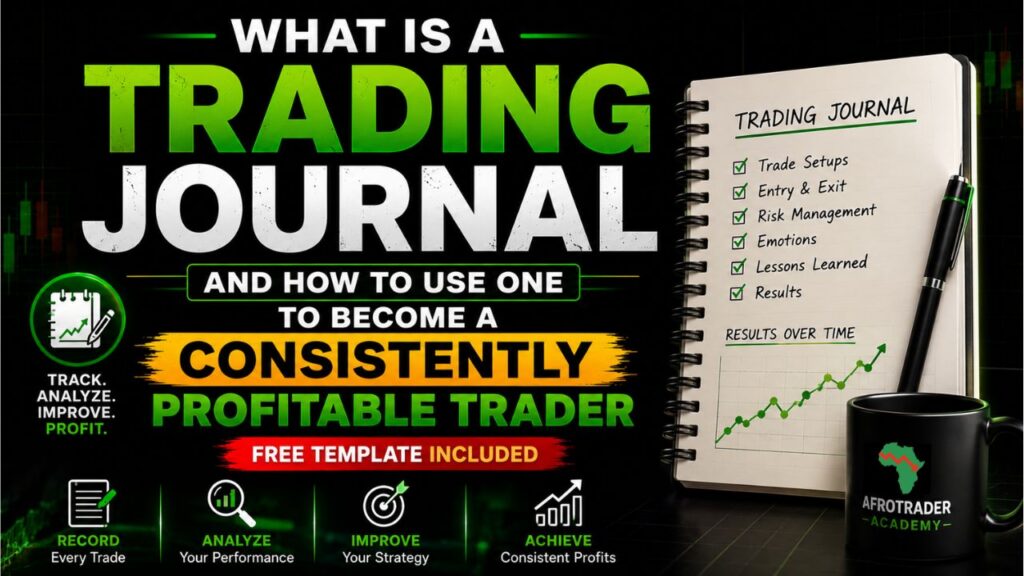
Pillar 4: A Trading Journal with Emotional State Tracking
The trading journal is the most powerful psychological tool available to a retail trader. Not because it records trades but because it makes psychological patterns visible. Invisible patterns cannot be changed. Visible ones can.
The minimum emotional tracking required for meaningful psychology work is a pre-trade emotional state score before every entry and a post-trade emotional state score after every exit, both on a simple 1 to 5 scale. Over 30 to 50 trades, this data generates the most actionable single insight available to most retail traders: the direct, quantified correlation between their emotional state at entry and their trade outcomes.
When a trader discovers in their own data that their win rate on trades entered at emotional state 4 or 5 is 58% while their win rate on trades entered at emotional state 1 or 2 is 24%, they have a specific, evidence-based rule to add to their framework: I do not trade when my pre-trade score is below 3. That rule is not advice from someone else. It is a conclusion drawn from their own trading history, which makes it far more likely to be followed.
Pillar 5: An Accountability Structure
Trading in complete isolation amplifies every psychological vulnerability. There is no one to witness impulsive decisions, no one to question rule violations, and no feedback mechanism beyond the market’s binary outcome of win or loss. An accountability structure addresses this.
The accountability structure does not need to be formal. It can be a trading partner who reviews your journal weekly, a community on Telegram or Discord where you post your analysis before trading, or simply the discipline of sharing your weekly compliance rate and plan review with someone whose opinion you respect.
The psychological function of accountability is that it makes rule violations visible beyond the private space of your own mind. The knowledge that someone will see your compliance rate changes the in-the-moment cost-benefit analysis of deviating from your plan. It is a structural intervention rather than a willpower-based one.
Section 4: How to Handle Losing Streaks, Drawdowns, and Bad Sessions
No section of trading psychology is more practically important than how to handle the periods when things are going wrong. This is when every psychological vulnerability is most activated and when the most lasting damage to both accounts and trading careers is typically done.
The Statistical Reality of Losing Streaks
Every positive expectancy strategy produces losing streaks. This is not a sign of strategy failure. It is a mathematical certainty. A strategy with a 50% win rate will produce runs of five consecutive losses with a probability of approximately 3%. Over 200 trades, that run will almost certainly occur. A strategy with a 45% win rate will produce runs of six consecutive losses with similar frequency.
The traders who survive losing streaks are the ones who understand this mathematically before the streak begins. Their backtested data tells them the maximum expected consecutive losing streak. When they experience four consecutive losses, they can compare that to their historical data and recognise it as within the normal range rather than evidence that their strategy has broken.
This is one of the strongest arguments for completing a thorough backtest before going live. The backtest data is psychological insurance. It converts an unexpected, destabilising event into an anticipated, manageable one.
The Losing Streak Response Protocol
What to Do During a Losing Streak
After 3 consecutive losses: reduce position size to 50% of normal. Continue trading only plan-compliant setups. Review compliance for each loss before the next session.
After 5 consecutive losses: take one full trading day away from the markets. Review your journal entries for all 5 losses. Determine whether the losses resulted from plan violations or correct decisions with negative outcomes.
After 7 consecutive losses: stop trading for 3 to 5 days. Conduct a full strategy review. Backtest the most recent 30 days of historical data to check whether market conditions have changed in a way that disadvantages your strategy.
In every case: do not increase position size to recover losses faster. Do not abandon your strategy based on a losing streak alone without reviewing compliance data. Do not make strategy changes during a drawdown. Make them after a recovery, based on journal data.
The Winning Streak Response Protocol
Winning streaks are psychologically dangerous in a different way from losing streaks. They produce overconfidence, relaxed discipline, and the belief that the current period of performance is sustainable indefinitely. The winning streak response protocol is simpler than the losing streak one: do nothing different.
Keep your position size exactly as defined in your trading plan. Keep your entry criteria exactly as defined. Keep your daily stop exactly as defined. The only appropriate change after a winning streak is to re-read your trading plan before the next session to ensure you have not drifted from the rules that produced the wins.
Managing Specific Bad Sessions
A bad session is different from a losing streak. A losing streak is a statistical sequence. A bad session is a session where you made specific identifiable errors. The response is different.
After a bad session, do not trade the following session until you have completed a written post-session review in your journal. The review should answer three questions: which specific rule did I violate, what was my emotional state when I violated it, and what specific change to my pre-trade routine or trading plan would make the same violation less likely next session.
Notice the structure of these questions. They are diagnostic and forward-looking, not punitive and backward-looking. The goal is not to punish yourself for the bad session. The goal is to extract the specific information that makes the next session better.
Section 5: Trading Psychology Specific to Prop Firm Challenges
Prop firm challenges create specific psychological pressures that personal account trading does not. Understanding them in advance is part of challenge preparation.
The Pressure Amplification Effect
A prop firm challenge is personal account trading with every psychological pressure amplified. The daily loss limit creates a hard floor that converts normal trading variance into potential account termination. The profit target creates a finish line that activates every competitive and impatient tendency. The time limit at firms that have one creates deadline anxiety. The challenge fee creates a sunk cost pressure that can make rational decision-making harder.
None of these pressures exist in isolation. They interact. A trader approaching the daily loss limit while behind on the profit target with a week left on the clock is experiencing three simultaneous psychological pressures, each of which independently degrades decision quality. Together, they create conditions that would test the emotional structure of an experienced professional.
The Near-Target Trap
The most common moment of psychological failure in a prop firm challenge is not the early stages when traders are cautious, and not the middle stages when traders are in the routine of consistent execution. It is when the trader can see the finish line.
At 75% of the profit target, a specific and well-documented psychological shift occurs. The trader begins to feel that passing is inevitable rather than probable. This shift produces overconfidence, relaxed entry criteria, and larger position sizes. It also produces recklessness, because the emotional distance from the target feels closer than the percentage remaining actually is.
The empirically supported response to reaching 75% of the profit target is to tighten discipline, not relax it. Reduce risk per trade to 0.5%. Require second-timeframe confirmation. Lower your personal daily stop. This counterintuitive response is the one that results in challenge passes rather than challenge failures at the last 25% of the journey.
Challenge-Specific Psychological Rules to Write Before Day 1
- When I reach 75% of my profit target, I reduce risk to 0.5% per trade, require second-timeframe confirmation, and lower my personal daily stop.
- When my personal daily stop is hit, I close MetaTrader immediately and do not return until the following session. There are no exceptions.
- I do not check my challenge dashboard during active sessions. I check it once before the session opens and once after it closes.
- After any stopped trade I leave my trading area for 20 minutes before evaluating any new setup.
- I do not increase position size because the target feels close or because I feel confident after recent wins.
Section 6: The Daily Habits of Psychologically Disciplined Traders
Psychological consistency in trading is not a trait some traders have and others do not. It is a set of habits practiced daily that compound over time into a stable, reliable mental framework. Here are the habits that separate traders who maintain psychological discipline over years from those who cycle repeatedly through the same emotional failures.
Habit 1: The Morning State Check
Before opening any charting platform, assess your mental and physical state honestly on a 1 to 5 scale. Consider: did you sleep well, are you under unusual stress from outside trading, do you have a clear mind, are you in an elevated emotional state from any source? Score yourself. If the score is 2 or below, do not trade today. This is not weakness. It is the highest quality risk management available. The market will be there tomorrow. Your edge requires a functioning prefrontal cortex to execute. Trying to trade with a compromised mental state does not test your strategy. It tests your stress response.
Habit 2: The Pre-Session Ritual
A fixed, repeatable sequence before every trading session that physically transitions your mental state from general life to deliberate trading mode. The specific content matters less than the consistency. A practical sequence: read your trading plan’s entry criteria, check the economic calendar, review yesterday’s journal entry, write today’s specific rules in a notebook (not just think them), and state your daily stop in dollars. The ritual functions as a psychological warm-up. Athletes do not compete without warming up. The physical and mental preparation before a performance is part of the performance. Trading is a performance.
Habit 3: The Post-Session Journal Entry
Every session ends with a journal entry before doing anything else. Not the next day. Not hours later when memory has filtered and rationalised. Immediately after the session closes. Record every trade taken, the emotional state before and after each trade, whether each trade met your strategy criteria, and one specific observation about your psychological performance today. The immediacy is critical because research shows traders without journals misremember up to 80% of losing trade details within 24 hours, particularly their emotional state at entry. You cannot learn from experiences you do not accurately remember. The journal is your memory.
Habit 4: The Weekly Psychology Review
Once per week, ideally Sunday, conduct a structured review of your psychological performance across the week’s sessions. This review has a different focus from the performance review you might do for strategy assessment. The questions are: what was my plan compliance rate, how many trades were taken in an elevated or distressed emotional state and what were their outcomes, was there a recurring emotional pattern across the week, and what is one specific psychological adjustment to my pre-trade routine for the coming week. The weekly review creates a feedback loop between your observed psychological patterns and your structural responses to them. Over months, this loop produces genuine measurable improvement.
Habit 5: Physical and Mental Recovery
Professional athletes understand that performance is limited by recovery. They treat sleep, nutrition, and mental downtime as part of their training programme rather than as separate concerns. Trading performance is equally limited by recovery. Sleep deprivation specifically reduces prefrontal cortex function, which is the exact brain region responsible for the disciplined decision-making that trading requires. Sustained stress from outside trading, poor physical health, and inadequate mental rest all degrade trading performance in ways that no amount of strategy improvement can compensate for. The practical implementation is simple: define clear start and end times for your trading day, close all trading platforms outside those hours, and treat sleep as a trading tool rather than a lifestyle choice.
Habit 6: Separating Your Worth from Your Results
The most durable psychological foundation for trading is a genuine cognitive separation between your identity and your trading results. This separation is not achieved through positive affirmations. It is achieved through a consistent practice of evaluating yourself as a trader on compliance with your process rather than on financial outcomes. A trader who achieved 90% plan compliance over a losing week is a better trader than a trader who achieved 50% compliance over a winning week. The first trader is developing a professional process. The second is getting lucky. Define your success metrics accordingly and review them weekly. Over time, this practice rewires how your brain experiences trading outcomes.
Section 7: Trading Psychology for African Traders
The psychological challenges of trading are universal. Fear, greed, overconfidence, and revenge trading affect traders in every market and every country. But African traders face some additional context-specific pressures that are worth addressing directly.
The Financial Pressure Amplification
In many African markets, the relative value of trading capital is higher than in Western markets. A $500 challenge fee in Uganda, Kenya, Nigeria, or Ghana represents a more significant proportion of monthly income than the same amount in the United States or Europe. This means the psychological pressure associated with a losing trade or a failed challenge is proportionally greater, because the financial stakes relative to personal resources are higher.
The practical response is the same as the general response to high-stakes pressure: reduce the stakes to a manageable level before adding psychological pressure. Start with the smallest available account sizes. Use the lowest available challenge fees. Make multiple small attempts rather than one large one. The goal is to develop the psychological muscle for consistent execution without the financial pressure overwhelming the learning process.
The Community and External Pressure
Many African traders operate in social environments where trading is discussed as a path to rapid wealth. Social media content, community groups, and peer conversations frequently highlight winning trades, challenge passes, and funded account milestones while rarely discussing the losing trades, failed challenges, and months of patient development that preceded them. This creates a distorted picture of what trading actually looks like and generates unrealistic expectations.
When a beginner trader’s actual experience of consistent losses during the learning phase is compared against the highlight reel of successes they see from others, the resulting psychological pressure can produce exactly the overtrading, risk-taking, and revenge trading that extends the losing phase. Understanding that what you see on social media is a selection of outcomes, not a representative sample, is an important psychological anchor during the development phase.
The Patience Required for the African Trading Pathway
The realistic pathway for an African retail trader to meaningful consistent income from trading takes longer than social media would suggest. The development phase of learning the technical skills typically takes 6 to 12 months of structured education and practice. The strategy testing phase, including backtesting and forward testing, adds another 2 to 4 months. The first prop firm challenge, pass rate factored in, may take 2 to 4 attempts across 3 to 6 months. A funded account generating consistent income requires a further period of disciplined performance.
The total realistic timeline from beginner to consistent funded income is typically 18 to 36 months for a disciplined, structured learner. This is not a discouraging statistic. It is a liberating one. It means you can stop measuring your progress against an unrealistic 3-month timeline and start measuring it against a realistic 24-month one. Progress that looks slow against an impossible standard looks very different against an accurate one.
Final Thought
Trading psychology is not a topic you graduate from. There is no point at which you have resolved all your psychological challenges and can trade purely mechanically without any further attention to your mental game. The psychological work is ongoing because the market continues to present new scenarios, new pressures, and new variations on the same fundamental challenges.
What changes with experience and deliberate practice is your response time. A beginner trader who experiences revenge trading may not recognise it until 20 minutes into the trade. An intermediate trader may recognise it at the moment of entry. An experienced trader may recognise the emotional state that precedes the impulse, before the trade idea even forms, and intercept it at the structural level rather than the willpower level.
That progression from unconscious reaction to conscious recognition to structural prevention is what trading psychology development actually looks like. It is not a transformation of your emotional nature. It is a progressive building of awareness, structure, and pre-committed rules that contain your emotional responses within a disciplined framework.
The tools are available to every trader at every level. A written trading plan. A pre-trade routine. A journal that records emotional states. A weekly review. An accountability structure. None of these requires money. All of them require commitment. And the traders who apply them consistently over 12 to 24 months will look back at who they were in their first trading year and recognise the transformation that happened without them ever noticing it building.
Risk Warning & Disclaimer
Trading Forex, Synthetic Indices, Cryptocurrencies and other leveraged financial instruments involves substantial risk and may not be suitable for all individuals. Leveraged trading can result in losses that exceed your initial capital. At AfroTrader Academy, we emphasize risk management, discipline and long-term consistency not shortcuts or guaranteed profits. The Academy provides educational content only and does not offer financial or investment advice. All trading decisions are the sole responsibility of the individual trader. Past performance does not guarantee future results. Please read our full Risk Disclosure and Disclaimer.


AfroTrader Academy is a professional trading education platform built to equip new and intermediate traders with the knowledge, structure, and discipline required to navigate modern financial markets. We focus on education over hype, process over profits, and skill development over shortcuts. Our mission is to help traders build a solid foundation, understand market behaviour, and develop repeatable trading frameworks they can apply independently.