What You Will Learn in This Guide
1. What backtesting is and why every serious trader uses it before going live.
2. The difference between manual and automated backtesting and which is right for you.
3. A step-by-step process for running your first backtest from start to finish.
4. The key metrics you need to read from a backtest and what they mean.
5. The most common backtesting mistakes that produce misleading results.
6. A complete review of the 7 best backtesting platforms in 2026: free and paid.
7. How backtesting connects to your trading plan, trading journal, and prop firm preparation.
Introduction
Most beginner traders learn a strategy, open a demo account, try it for a week or two, and then go live. They do not know whether the strategy actually works. They do not know the real win rate. They do not know the maximum losing streak to expect. They do not know whether the strategy produces positive expected value over a meaningful sample of trades. They are flying blind, and when the inevitable losing streak arrives, they abandon the strategy because they have no data telling them whether the losses are normal or a sign that the approach is broken.
Backtesting solves all of this. It is the process of applying your trading strategy to historical price data to see how it would have performed in the past. Before you risk a single dollar of real capital, you can know your strategy’s win rate, profit factor, average risk-to-reward achieved, maximum drawdown, and the longest losing streak you are likely to face. That knowledge transforms your relationship with losing trades. Instead of panicking after three consecutive losses and abandoning your approach, you know that your strategy’s maximum tested losing streak is five, and you are currently at three. You stay disciplined because the data supports staying disciplined.
Backtesting does not guarantee future results. Past performance is never a guarantee of future performance. But a strategy that has never worked on historical data has no rational basis for working on a live account. And a trader who has backtested 200 trades of their strategy is in a fundamentally different position than one who has not, because they have evidence rather than hope.
This guide covers everything a beginner needs to know about backtesting: what it is, how to do it, what the results mean, the common mistakes that make backtests misleading, and the best platforms available in 2026 across every budget level.
A strategy you have never tested is a guess dressed up as a plan. Backtesting is what separates traders who have evidence for their approach from traders who only have confidence in it.
Section 1: What Is Backtesting?
Backtesting is the process of applying a set of trading rules to historical market data to evaluate how those rules would have performed in the past. The core idea is simple: if your strategy had clear, objective entry and exit rules, you can go back through historical charts and identify every instance where those rules would have generated a trade signal, record the outcome of each trade, and calculate the overall performance of the strategy across hundreds of trades.
The result is a dataset that tells you how the strategy actually behaves over time, across different market conditions, and through different phases of trending and ranging price action. This dataset is your evidence base for deciding whether to trade the strategy live.
Backtesting vs Forward Testing vs Live Trading
- Backtesting: Testing your strategy against historical data that has already occurred. Fast, free, and allows you to test across years of data in hours. The limitation is that historical data cannot perfectly replicate future market conditions.
- Forward Testing (Paper Trading): Trading the strategy in real time on a demo account without using historical data. Slower because it happens in real time, but tests how the strategy performs under current market conditions. More realistic than backtesting but takes months to accumulate a meaningful sample.
- Live Trading: Trading the strategy with real money. The ultimate test of whether a strategy works, but also the most expensive way to find out it does not. Should only follow backtesting and forward testing, not replace them.
The recommended sequence before risking real capital is: backtest first to establish whether the strategy has historical edge, then forward test on demo for 30 to 60 days to validate it in current conditions, then go live with small position sizes as you build confidence in the results.
Manual Backtesting vs Automated Backtesting
There are two fundamental approaches to backtesting, and understanding the difference helps you choose the right platform.
Manual Backtesting
Manual backtesting means going through historical charts bar by bar, identifying setups that meet your strategy criteria, recording the entry, stop loss, target, and outcome for each trade in a spreadsheet or journal, and then calculating the performance statistics yourself. It is time-consuming but has significant advantages for discretionary traders. The act of manually reviewing hundreds of historical setups builds an intuition for price action patterns that automated testing cannot replicate. You see not just the outcome but the context: what the overall market structure looked like, what the news environment was, how price behaved around key levels.
Manual backtesting is the recommended starting approach for beginners who are learning to identify setups rather than testing a purely rule-based system.
Automated Backtesting
Automated backtesting uses code or a platform’s scripting language to define your strategy’s entry and exit rules precisely, then run those rules across historical data automatically. The platform identifies every signal and records every trade outcome without you needing to review each one individually. It can test years of data across multiple timeframes in seconds.
The limitation is that it requires your strategy to be expressible in precise, unambiguous code. Discretionary elements such as ‘the trend looks strong’ or ‘price is approaching an important level’ cannot be easily automated. Automated backtesting is better suited to systematic traders with clearly defined, mechanical entry and exit rules.
Which Approach Is Right for You?
If your strategy involves reading price action, identifying support and resistance visually, or any element of discretionary judgment, use manual backtesting. It tests your actual decision-making process, not just a simplified version of it.
If your strategy has purely mechanical rules such as ‘enter when the 10 EMA crosses above the 20 EMA on a 15-minute chart’, automated backtesting is faster and produces statistically cleaner results.
Many experienced traders use both: automated testing to validate the mechanical rules, then manual replay to practice executing them under realistic conditions.
Section 2: How to Backtest a Trading Strategy Step by Step
Here is the complete process for running your first meaningful backtest. Each step matters. Skipping steps produces results that feel useful but are actually misleading.
Step 1: Write Down Your Strategy Rules Precisely
Before you can backtest a strategy, you need to be able to describe every entry and exit condition in objective, unambiguous language. Not ‘enter when the trend looks bullish’ but ‘enter long when price is making higher highs and higher lows on the H4 chart, has pulled back to the 50 EMA, and a bullish engulfing candle has closed above the EMA on the H1 chart.’
The test of whether your rules are objective enough is this: could a different person read your rules and identify the same setups you would identify? If yes, your rules are objective. If no, they contain elements of discretionary judgment that need to be defined more precisely before you can backtest them reliably.
Write down all of the following before starting your backtest: entry trigger, required market structure conditions, stop loss placement rule, take profit rule or exit criteria, timeframes used for analysis and entry, and any filters such as session times or news avoidance.
Step 2: Choose Your Instrument and Time Period
For your first backtest, choose the instrument you actually plan to trade: EUR/USD for most beginner Forex traders. Choose a time period of at least 12 months of historical data, preferably 2 to 3 years. This ensures your results span different market conditions: trending periods, ranging periods, high volatility periods, and low volatility periods. A strategy that only works in trending markets will look excellent if tested on a 3-month trending period and misleading if you only discover its weakness in ranging conditions when you go live.
If you are testing a strategy on a daily or 4-hour timeframe, 2 to 3 years of data gives you enough trades for statistical significance. If you are testing on a 15-minute or 1-hour timeframe, the same 2 to 3 year period will generate far more trade signals and you will have a larger sample to work with.
Step 3: Run the Backtest
Using your chosen platform (covered in detail in Section 4 of this guide), go through the historical data from the beginning of your chosen period. For each bar or candle, apply your entry rules and ask: does this bar trigger a trade signal? If yes, record the trade. If no, move to the next bar.
For each recorded trade, note: entry date and time, entry price, stop loss price and distance in pips, take profit price and distance in pips, lot size (calculate based on your planned risk per trade), result (win or loss), result in pips, and result in dollars based on your account size and risk parameters.
Do not cherry-pick. Every setup that meets your criteria must be recorded, including the ones you would have preferred to skip because the chart pattern did not look clean or because a news event was nearby. The backtest is only as honest as your willingness to record every signal.
Step 4: Calculate Your Performance Statistics
Once you have recorded a minimum of 50 trades and ideally 100 or more, calculate the performance statistics covered in the next section. The minimum meaningful sample for drawing conclusions about a strategy is 50 trades. Fewer than that and you are measuring luck as much as edge.
Step 5: Analyse the Results Honestly
Look at the statistics and ask whether they support trading this strategy live. A strategy is worth proceeding to forward testing if it shows positive expectancy, a profit factor above 1.5, and a maximum drawdown you could withstand psychologically and financially. If the results are negative or marginal, the strategy needs adjustment or replacement before live trading.
Step 6: Forward Test Before Going Live
Once your backtest shows a genuine edge, spend at least 30 trading days forward testing the strategy on a demo account under current market conditions. The forward test will reveal whether the edge persists in the current environment and will give you real-time practice executing the strategy before real capital is at stake.
Section 3: The Key Metrics to Read from Your Backtest
A backtest produces a set of numbers. Knowing what each number means and what counts as a good result is essential for interpreting whether your strategy has a genuine edge.
Backtesting Performance Metrics Reference
| Metric | What It Measures | Target / Benchmark |
| Win Rate | Percentage of trades that close profitably | Above 50% at 1:1 R:R, but not required at higher R:R |
| Profit Factor | Gross profits divided by gross losses | Above 1.5 is healthy. Above 2.0 is strong. |
| Max Drawdown | Largest peak-to-trough drop during the test period | Should stay within your planned risk parameters |
| Average R:R Achieved | Average reward relative to average risk on winning trades | Minimum 1:2 recommended across your sample |
| Expectancy | (Win Rate x Avg Win) minus (Loss Rate x Avg Loss) | Positive number means the strategy has an edge |
| Consecutive Losses | Maximum losing streak recorded during the backtest | Prepares you for the drawdowns you will face live |
| Total Trades Tested | Number of trade setups triggered over the test period | Minimum 50 trades for statistically meaningful results |
| Sharpe Ratio | Return relative to volatility of returns | Above 1.0 is acceptable. Above 2.0 is excellent. |
The Most Important Metric: Expectancy
Expectancy is the single most important number from any backtest. It tells you the average amount you can expect to win or lose per trade, expressed as a multiple of your average risk. A positive expectancy means the strategy makes money over time. A negative expectancy means it loses money over time regardless of how good individual trades feel.
The formula is: (Win Rate multiplied by Average Win) minus (Loss Rate multiplied by Average Loss).
Example: Your backtest shows a 45% win rate. Your average winning trade returns 2R (twice the risked amount). Your average losing trade costs 1R. Expectancy equals (0.45 x 2) minus (0.55 x 1) which equals 0.90 minus 0.55 which equals 0.35R per trade. This is a positive expectancy strategy. For every dollar you risk, you expect to make 35 cents over time. That is a viable trading approach.
A Critical Insight About Win Rate
Many beginners assume a strategy needs to win more than 50% of trades to be profitable. This is wrong.
A strategy with a 35% win rate and a consistent 1:3 risk-to-reward ratio is more profitable than a strategy with a 60% win rate and a 1:1 risk-to-reward.
What matters is positive expectancy over a large sample of trades, not the win rate in isolation. Always analyse win rate and risk-to-reward together.
Profit Factor
Profit factor is calculated by dividing total gross profits by total gross losses. A profit factor of 1.0 means the strategy breaks even. A profit factor of 1.5 means for every dollar lost, the strategy makes one dollar and fifty cents. A profit factor of 2.0 means it makes two dollars for every dollar lost. Most professional traders consider 1.5 to be the minimum viable profit factor for a strategy worth trading live. Below 1.5, the margin of safety against real-world execution differences such as slippage, spread variation, and psychological pressure is too thin.
Maximum Drawdown
Maximum drawdown is the largest peak-to-trough decline in your account during the test period. This number is arguably more important than the profit figures because it tells you what you will actually experience emotionally when trading the strategy live. A strategy that produced 40% returns over two years but had a 35% maximum drawdown along the way is not a comfortable strategy to trade. Most traders would abandon it during the 35% drawdown long before the eventual recovery.
Your maximum drawdown from backtesting should be within the range you defined in your trading plan as the trigger for a full strategy review. If your plan says you will pause and review at a 15% drawdown but the backtest shows the strategy routinely produces 20% drawdowns, either adjust your plan or adjust the strategy before going live.
Section 4: The Most Common Backtesting Mistakes
Backtesting is only as useful as it is honest. These are the mistakes that produce results that feel compelling but are actually misleading.
Mistake 1: Overfitting to Historical Data
Overfitting is the most dangerous backtesting mistake and the hardest to avoid. It happens when you adjust your strategy’s rules repeatedly until they produce excellent results on your test data, without those rules having any logical connection to why the market moves the way it does. An overfitted strategy is essentially a description of the past, not a model of underlying market behaviour. It will almost always fail on future data.
The warning sign of overfitting is a backtest with an extremely high win rate (above 70%) and an unusually smooth equity curve. Real strategies have losing streaks and periods of flat or negative performance. If your backtest shows nearly perfect results, it is almost certainly overfitted. The practical guard against overfitting is to start with a simple strategy with clear logical rules, backtest it, and only adjust parameters based on market logic rather than to improve the numbers.
Mistake 2: Using Low-Quality Historical Data
The quality of your backtest is directly limited by the quality of the historical data you use. MT4’s default historical data, for example, is often incomplete or has gaps, particularly for older periods. Some platforms use bar data (open, high, low, close per period) rather than tick data, which means they cannot tell you whether your stop loss or take profit was hit first within a candle. This can produce misleadingly positive results, particularly for strategies that use tight stops on lower timeframes.
For serious backtesting, use platforms that provide high-quality tick data. Forex Tester Online is one of the most respected sources of tick-level historical data for Forex. The higher the quality of your historical data, the more reliable your backtest results will be.
Mistake 3: Not Accounting for Spread and Slippage
Many traders run backtests that do not include the spread they will actually pay on each trade. A strategy that appears profitable before spread may be marginal or unprofitable after it. Always factor in at minimum the typical spread for your instrument. For EUR/USD on Exness, this is typically 0.1 to 0.3 pips during normal market hours. On strategy testers, ensure you have included the spread in your calculations before drawing any conclusions.
Slippage is the difference between the price you expected to enter at and the price you actually executed at. It occurs during high-volatility periods and around news events. Manual backtests cannot easily replicate slippage, but you should mentally account for it by applying a modest negative adjustment to trades that would have been entered near news events or at market open.
Mistake 4: Testing Too Short a Period
A backtest covering three months of data and thirty trades tells you very little. Markets go through cycles that can last months or years. A strategy tested only during a strong trending period may appear excellent but fail completely in the ranging conditions that follow. A strategy tested only during low-volatility conditions may appear consistent but collapse during high-volatility periods. Test across at minimum 12 months and ideally 2 to 3 years of varied market conditions to draw meaningful conclusions.
Mistake 5: Cherry-Picking Trades
Recording the trades that worked and skipping or rationalising the ones that did not is the most common form of dishonesty in manual backtesting, and it is usually unconscious. If your setup criteria were met, the trade must be recorded regardless of the outcome. One useful technique to guard against cherry-picking is to write down your exact criteria before you start the backtest and then apply them mechanically, recording every signal without exception.
Mistake 6: Treating Backtest Results as a Guarantee
A backtest tells you how your strategy would have performed on past data. It does not guarantee it will perform the same way on future data. Markets evolve. Correlations change. Volatility regimes shift. Use your backtest results as evidence that a strategy has historical edge, as a baseline for setting realistic expectations, and as preparation for the specific drawdowns and losing streaks you should expect. Do not treat the equity curve as a prediction.
Section 5: The 7 Best Backtesting Platforms in 2026
Here are the best backtesting platforms available in 2026, covering every budget and every trading style. All platforms have been verified with current 2026 pricing and features.
Quick Reference: Backtesting Platforms Compared (May 2026)
| Platform | Cost | Backtest Type | Best For | Standout Feature |
| MT4 / MT5 Strategy Tester | Free via broker | Automated (EAs) | Beginner automated | Free through your broker |
| TradingView Bar Replay | Free / $15+ per month | Manual | Beginners, visual traders | Free tier is sufficient to start |
| Forex Tester Online | $149/year (data included) | Manual (tick-by-tick) | Discretionary traders | Real tick data replay |
| Soft4FX (MT4 plugin) | $109 one-time | Manual via MT4 | MT4 manual traders | Works inside your MT4 platform |
| TradeZella | $29/month | Manual replay + stats | Active traders | Links backtest to journal analytics |
| BacktestZone | Free (web-based) | Manual | Budget beginners | No download required |
| Google Sheets / Excel | Completely free | Manual (spreadsheet) | All levels | Full customisation, no cost |
1. MetaTrader 4 and MetaTrader 5 Strategy Tester | Best Free Option for Automated Backtesting
Cost: Free, available through your broker. No additional cost.
Best For: Traders running Expert Advisors (EAs) and those who want automated backtesting without extra software
Website: www.metatrader.com | www.metatrader4.com
MetaTrader’s built-in Strategy Tester is the most widely used backtesting tool in the retail Forex industry simply because it comes free with every MetaTrader account. For traders running Expert Advisors, it is the natural choice: you test the EA on historical data using the same platform it will trade on live. MT5’s Strategy Tester is significantly more advanced than MT4’s, supporting multi-currency testing, multi-threaded processing, and real tick data from the broker. For manual strategy testing, the Strategy Tester is less practical because it is designed primarily for EA testing rather than visual bar-by-bar replay. However, for automated strategy development, it remains the standard tool used by professional EA developers globally.
Key Features:
- Completely free through your broker with no additional subscription required
- MT5 Strategy Tester supports real tick data modelling for higher-accuracy results
- Multi-threaded optimisation in MT5 allows testing thousands of parameter combinations quickly
- Tests run on the same platform you will use for live trading, no execution differences
- Visual mode allows watching the EA trade historically in real time
- Access to historical data from your broker, the quality depends on the broker
Limitations:
- Primarily designed for automated EA testing, manual backtesting is cumbersome
- MT4’s default modelling uses interpolated tick data (not real ticks) which reduces accuracy for tick-sensitive strategies
- Requires MQL4 or MQL5 programming knowledge to build automated strategies – not beginner-friendly for coding
- Historical data quality varies significantly between brokers
2. TradingView Bar Replay | Best for Beginners — Free Manual Backtesting
Cost: Free tier includes Bar Replay. Paid plans from $14.95 per month (Essential) for additional features.
Best For: Beginner to intermediate traders who want an accessible, visual manual backtesting experience
Website: www.tradingview.com
TradingView’s Bar Replay tool is the most beginner-accessible manual backtesting option available in 2026. It is built directly into the TradingView charting interface, requires no downloads or installation, and works on any device with a browser. You load any instrument and any timeframe, press the replay button at any point in history, and the chart rebuilds bar by bar as you move forward through time. You can place your indicators on the chart before starting the replay, see your strategy’s signals appear naturally as they would in real time, and record your entry and exit decisions. The free tier provides enough functionality for meaningful manual backtesting. The limitation is that TradingView uses bar data rather than true tick data, meaning within each candle you cannot determine whether your stop loss or take profit was hit first. For strategies on 15-minute timeframes and above, this limitation is generally acceptable.
Key Features:
- Available on the free TradingView tier, no additional cost beyond your existing subscription
- Works in any browser on any device no download or installation required
- All your indicators and drawing tools are available during replay, exactly as in live trading
- Supports Forex, crypto, stocks, indices, and commodities across all timeframes
- Intuitive playback controls: step forward one bar, fast forward, or play at variable speed
- The most widely used visual backtesting tool among retail traders globally
Limitations:
- Bar data only, cannot determine whether stop or target was hit first within a candle
- Free tier limits number of indicators per chart (3 on free, more on paid plans)
- No built-in trade recording or statistics, you must log trades manually in a spreadsheet
- Not designed for automated strategy testing, manual use only
3. Forex Tester Online (FTO) | Best for Serious Discretionary Traders
Cost: $149 per year with historical data included. Browser-based, no download required.
Best For: Discretionary traders who want the most realistic manual backtesting experience with real tick data
Website: forextester.com
Forex Tester Online is the browser-based evolution of the Forex Tester desktop software that has been used by professional traders since 2010. Its most significant differentiator is real tick data replay: unlike TradingView which replays candle by candle, FTO replays actual tick-by-tick price movement. This eliminates the fundamental ambiguity in bar-based backtesting of whether your stop or take profit was hit first within a candle. For scalpers and traders using tight stops on lower timeframes, this distinction is critical for accurate results. FTO covers 28 Forex pairs, 10 cryptocurrency assets, 16 stocks, 10 indices, 10 ETFs, and commodities, with 20 or more years of historical data for most instruments. At $149 per year with all data included, it is the strongest value proposition for serious manual backtesting.
Key Features:
- Real tick data replay eliminates ambiguity about stop or target hit order within a candle
- 20 or more years of historical data included in the subscription price
- Browser-based, works on any operating system including Mac, without installation
- Exit Optimizer feature tests different exit strategies against the same entries
- Mystery Mode hides future price to prevent forward-looking bias during manual testing
- Covers Forex, crypto, stocks, indices, ETFs, and commodities in one platform
- Built by the team behind the industry-standard Forex Tester desktop software since 2010
Limitations:
- $149 per year is a meaningful cost for beginners, TradingView or MT4/MT5 may be more appropriate starting points
- No direct integration with live trading accounts, backtest results stay within the platform
- Learning curve is steeper than TradingView for complete beginners
4. Soft4FX Forex Simulator | Best Manual Backtesting Plugin for MT4 Users
Cost: $109 one-time purchase. Works as a plugin inside MetaTrader 4 & 5
Best For: Traders who want manual backtesting capability within their existing platform
Website: soft4fx.com
Soft4FX is a manual backtesting simulator that operates as a plugin inside MT4 & MT5, allowing traders to run visual, bar-by-bar backtests directly within their Metatrader platform rather than switching to a separate tool. The significant advantage is familiarity: you are working within the exact same interface, with the exact same chart appearance, indicators, and drawing tools that you use for live trading. This reduces the psychological distance between backtesting and live execution. Soft4FX supports high-quality historical data, customisable spread and commission settings, and a comprehensive trade statistics report at the end of each backtest session.
Key Features:
- Runs inside MT4 & MT5 familiar interface with all your existing indicators and tools
- One-time purchase of $109 with no recurring subscription + a free demo for you to test as long as you want
- Customisable spread and commission settings for realistic cost modelling
- Detailed trade statistics report generated after each backtest session
- Supports importing high-quality historical data from external sources
- Comprehensive order management tools including pending orders, stop loss modification, and partial closes
Limitations:
- Depends on Metatrader’s historical data quality unless you import external data
- One-time cost of $109 might be a high investment for a beginner
5. TradeZella Replay and Backtesting | Best for Linking Backtest Data to Trading Journal Analytics
Cost: Starting at $29/m for beginner traders & $49/m for advanced traders.
Best For: Active traders who want to connect their backtesting data directly to their trading journal analytics
Website: www.tradezella.com
TradeZella is primarily known as a trading journal platform (covered in the AfroTrader Academy trading journal guide) but includes a manual backtesting replay feature that connects seamlessly to its analytical dashboard. The unique advantage is continuity: your backtest results, forward test results, and live trading results all feed into the same analytical engine, allowing you to compare your backtested win rate and profit factor directly against your live trading performance. The AI insights engine surfaces patterns across all three phases of your trading development. For traders who take both backtesting and journaling seriously and want a single platform for both, TradeZella is the strongest integrated option.
Key Features:
- Backtesting replay connects directly to journal analytics allowing you to compare backtest versus live performance
- AI insights engine surfaces patterns across your backtest, forward test, and live trading data
- Trade replay feature for reviewing specific historical trades in detail
- Supports Forex, crypto, futures, and stocks within one platform
- Prop Firm Sync tracks challenge-specific metrics alongside backtesting
- 500 or more broker integrations for automatic live trade import alongside manual backtest entries
Limitations:
- No permanent free tier, only a 7-day trial period
- Primary value is in the journal analytics: if you only need backtesting, cheaper options are available
6. BacktestZone | Best Completely Free Web-Based Option
Cost: Completely free. No registration required. Browser-based.
Best For: Budget-conscious beginners who want zero-cost backtesting without any download or subscription
Website: backtestzone.com
BacktestZone is a free, browser-based manual backtesting tool that requires no download, no registration, and no payment. You load historical data, choose your instrument and timeframe, and the tool provides a bar-by-bar replay interface where you can place trades, set stop losses and take profits, and review your results. For a complete beginner who wants to experience what manual backtesting feels like before committing to a paid platform, BacktestZone is a practical and accessible starting point. The limitations are significant though, the historical data depth is more limited than dedicated platforms, the analytics are basic, and the interface is less polished than paid alternatives but for a free tool it provides genuine value.
Key Features:
- Completely free with no account creation required
- Web-based, accessible on any device with a browser
- Functional bar-by-bar replay with basic trade entry and exit capability
- No commitment required which is ideal for trying manual backtesting for the first time
- Basic statistics generated after each backtest session
Limitations:
- Limited historical data depth compared to dedicated paid platforms
- Basic analytics – lacks the depth of Forex Tester or TradeZella
- No tick data, only bar-based replay
- Fewer instruments and timeframes than premium platforms
7. Google Sheets or Microsoft Excel | Best DIY Option for Manual Record Keeping
Cost: Completely free (Google Sheets). Included with Microsoft 365 (Excel).
Best For: All traders at all levels who want full control over their backtest data and analysis
Website: sheets.google.com | www.office.com
A well-structured Google Sheets or Excel spreadsheet is not a replay platform but it is an essential component of any manual backtesting workflow. After identifying trades in TradingView’s Bar Replay or Forex Tester, you record every trade in a spreadsheet and calculate your performance statistics from the raw data. This approach gives you complete control over what you track, how you analyse it, and how you present the results. It also forces you to understand every metric by building the formulas yourself, which is genuinely educational. The AfroTrader Academy Trading Journal builder (covered in our trading journal guide) is designed for exactly this purpose and includes pre-built formulas for the key backtesting statistics. The combination of TradingView Bar Replay for visual chart replay plus Google Sheets / MS Excel for trade recording is the most effective free backtesting setup available.
Key Features:
- Completely free with no limitations on trades, instruments, or timeframes recorded
- Full customisation, track any metric that matters for your specific strategy
- The AfroTrader Academy Trading Journal builder provides pre-built formulas for backtest statistics
- Accessible from any device via Google Drive or MS Office
- Pairs perfectly with TradingView Bar Replay for a complete free backtesting setup
- Educational value in building the formulas yourself, deepens your understanding of the metrics
Limitations:
- No visual replay capability must be paired with a replay platform
- All trade entry is manual, no automation
- Scales poorly for very large sample sizes above 500 trades
Section 6: The Recommended Backtesting Setup for African Traders
The Best Free Setup: TradingView Bar Replay and Google Sheets
For a beginner trader who does not want to spend money before knowing whether their strategy has edge, the combination of TradingView’s free Bar Replay tool and the AfroTrader Academy Trading Journal in Google Sheets is the most effective zero-cost backtesting setup available.
The workflow is: open TradingView and navigate to any historical period on your chosen instrument and timeframe. Set up your indicators. Press Bar Replay and move forward through history bar by bar. When a setup that meets your strategy criteria appears, record the trade in your Google Sheets journal. Note the entry price, stop loss, take profit, and result. At the end of each session, update your statistics. After 50 or more trades, calculate your win rate, profit factor, and expectancy.
The Best Paid Setup: Forex Tester Online and TradeZella
For traders who are serious about the quality of their backtest results and want the most accurate and analytically rich experience available, Forex Tester Online for replay (real tick data, the most accurate available) combined with TradeZella for analytics (the most comprehensive trading journal and performance analytics platform) is the strongest combination. The annual cost is approximately $149 for FTO plus $396 for TradeZella, totalling around $545 per year or roughly $45 per month for a professional-grade backtesting and journaling infrastructure.
The Best Setup for MT4/MT5 Traders Already on Exness
If you are already trading on Exness with MT4 or MT5, the most practical paid upgrade for backtesting is Soft4FX at $109 one-time. It works inside your MetaTrader interface with your existing indicators and requires no learning of a new platform. For automated strategy testing, MetaTrader’s built-in Strategy Tester is free and adequate for EA development.
Our Recommended Starting Point
Start with TradingView Bar Replay (free) and the AfroTrader Academy Trading Journal builder exported to either Google Sheets or MS Excel.
Complete at least 50 trades of backtesting on your strategy before deciding whether to invest in a paid platform.
If your backtest shows the strategy has genuine edge and you plan to continue developing it seriously, then consider upgrading to Forex Tester Online for higher-accuracy results.
Section 7: Backtesting and Prop Firm Challenges
If one of your trading goals is to pass a prop firm challenge, backtesting is not optional. It is the most important preparation step you can complete before paying a challenge fee.
The data from the previous section on prop firm challenge pass rates is directly relevant here. Traders without backtested strategies pass challenges at approximately 15%. Traders with backtested strategies from 90 or more days of historical data pass at 40% or higher. That difference is not explained by natural ability. It is explained by preparation and evidence.
Specifically, your backtest data gives you the three numbers that most determine whether you will survive a prop firm challenge. Your expected win rate tells you how many consecutive losses are statistically normal for your strategy, which prevents you from abandoning your approach during normal drawdowns. Your maximum drawdown from backtesting tells you whether your strategy is compatible with the firm’s drawdown rules before you start. And your average risk-to-reward tells you whether your strategy can reach the profit target with the firm’s daily loss limit in place.
Before purchasing any prop firm challenge, backtest your exact strategy with the exact risk parameters the challenge requires, on the exact instruments you plan to trade, and verify that the strategy would have passed the challenge rules historically. This is the most direct form of challenge preparation available.
For a complete guide on how to pass a prop firm challenge, visit:
How to Pass a Prop Firm Challenge: The Complete Step-by-Step Guide
Free Prop firm challenge planning tool:
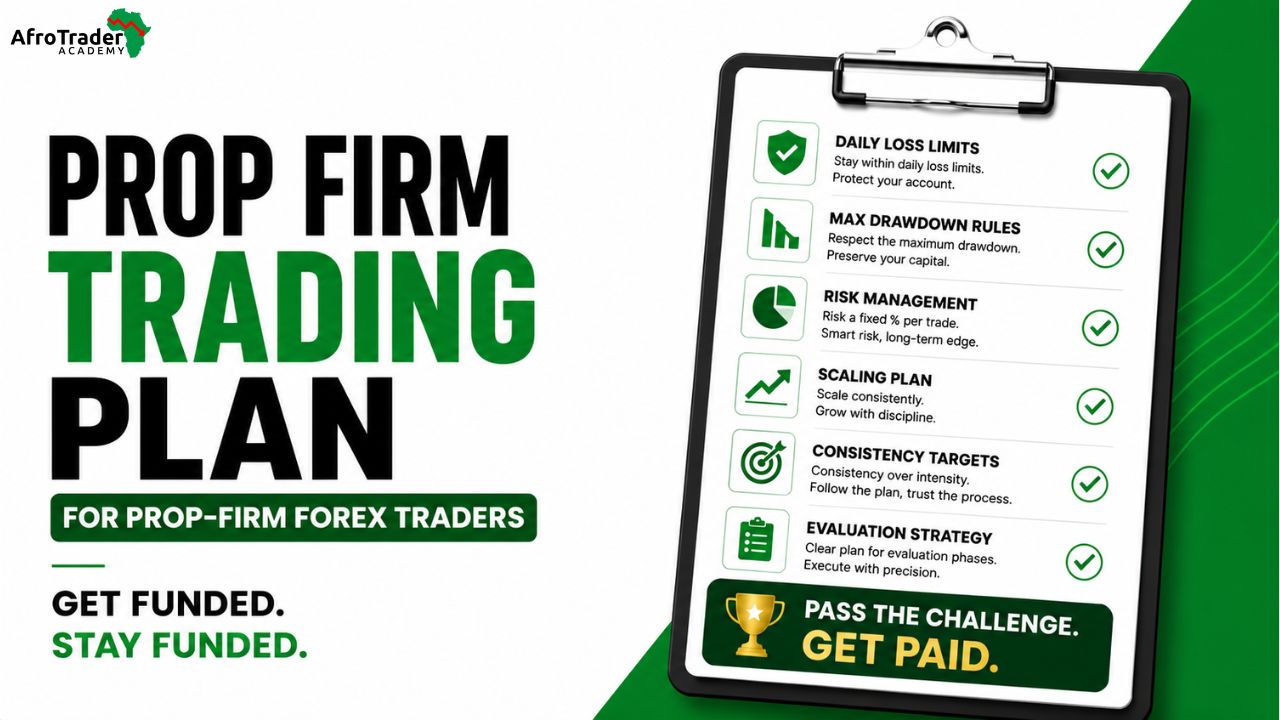
Prop Firm Challenge Plan Builder
Section 8: Backtesting and Your Trading Plan
A backtested strategy and a written trading plan are two sides of the same coin. Your trading plan defines the rules. Your backtest provides the evidence that those rules have produced positive results historically.
The key connection is this: your backtest results should directly inform the risk management parameters in your trading plan. Your maximum tested drawdown informs the drawdown threshold you set in your plan before pausing for a strategy review. Your maximum consecutive losing streak informs how many consecutive losses you will tolerate before reducing position size. Your profit factor and expectancy tell you whether the strategy is worth the risk parameters you are applying.
Without backtesting, your trading plan’s risk parameters are arbitrary. With backtesting, they are grounded in evidence specific to your strategy’s actual behaviour over hundreds of historical trades.
See the complete trading plan build guide here:

How to Build a Forex Trading Plan from Scratch: The Complete Guide
Free interactive trading plan builder for live traders:
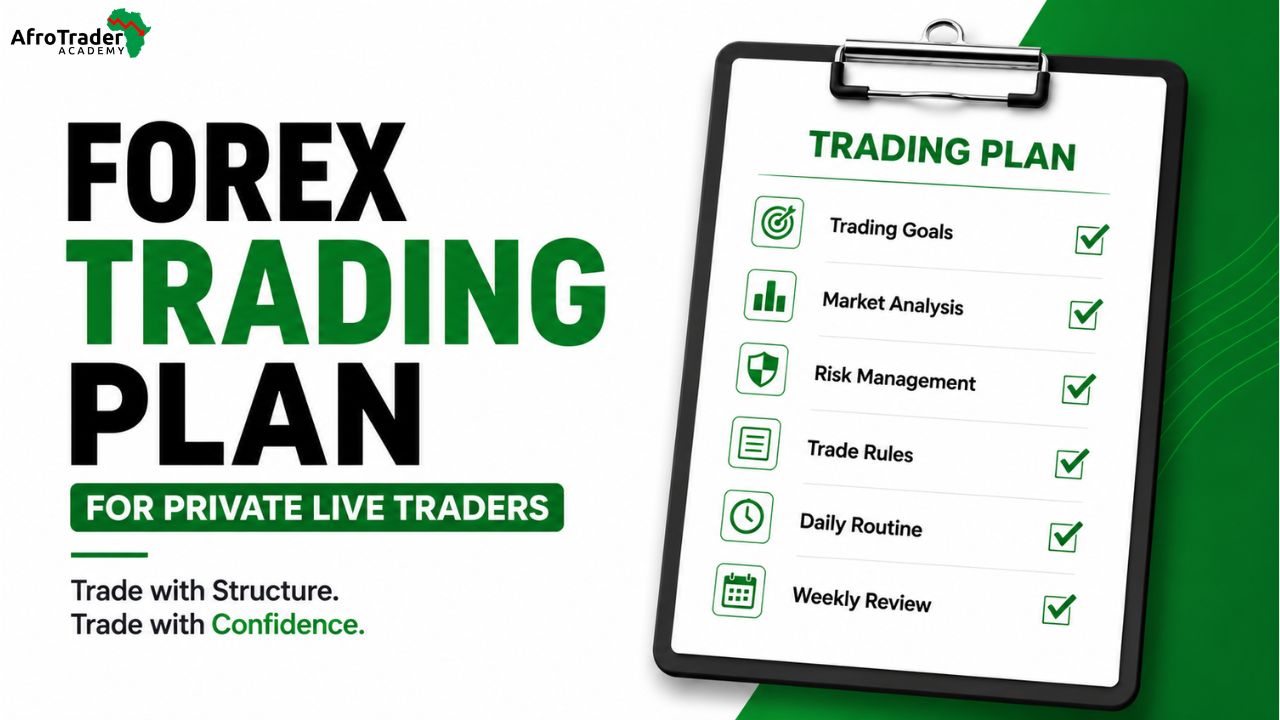
Trading Plan Builder For Live Traders
Final Thought
Backtesting is the single most underused tool in beginner trading. The traders who use it consistently and honestly are in a fundamentally different position from those who do not. They know their strategy’s win rate. They know what drawdown to expect. They know how many consecutive losses are normal. They have evidence rather than hope.
The good news is that meaningful backtesting does not require expensive software. TradingView’s free Bar Replay tool and a Google Sheets template can generate the evidence base you need before risking a single dollar of real capital. The investment required is time, honesty, and the discipline to record every trade signal regardless of the outcome.
Start with at least 50 trades of your strategy on historical data before going live. If the results show positive expectancy and a profit factor above 1.5, you have evidence to proceed. If they do not, you have saved yourself the cost of finding out on a live account.
Risk Warning & Disclaimer
Trading Forex, Synthetic Indices, Cryptocurrencies and other leveraged financial instruments involves substantial risk and may not be suitable for all individuals. Leveraged trading can result in losses that exceed your initial capital. At AfroTrader Academy, we emphasize risk management, discipline and long-term consistency not shortcuts or guaranteed profits. The Academy provides educational content only and does not offer financial or investment advice. All trading decisions are the sole responsibility of the individual trader. Past performance does not guarantee future results. Please read our full Risk Disclosure and Disclaimer.


AfroTrader Academy is a professional trading education platform built to equip new and intermediate traders with the knowledge, structure, and discipline required to navigate modern financial markets. We focus on education over hype, process over profits, and skill development over shortcuts. Our mission is to help traders build a solid foundation, understand market behaviour, and develop repeatable trading frameworks they can apply independently.